
Greek mythology tells us about the twelve tasks of Hercules, and yes, the Hydra keeps growing twice as many heads as you cut, but that still is easier than being an experimental Nigerian artiste. Indie singer, Chidumebi Madubike, stage name Dumebi, is embarking on this journey, but for the 19-year-old, this is less maddening and mostly exciting.
For generations, globalism has inspired the world to blend sounds from across the blue marble, notably the Arabian scales in “Beautiful Liar” by Beyoncé and Shakira. However, the 2026 Grammys saw Africans denounce songs that have “Western” influences. While the brunt was pointed at Tyla, the accusations were unfounded. We’ve always had Afropop stars, plus genres like Reggae and Hip-Hop cast large shadows on our 21st century sounds.
We have a history of being intellectual, experimental, and sometimes referential. Now, we have more Africans taking on even more bold approaches to what can be classified as “African music”, and Dumebi is making a very strong case for an indie genre.
Want to learn about the Alte community in Kaduna? Read more
What’s in a Name?
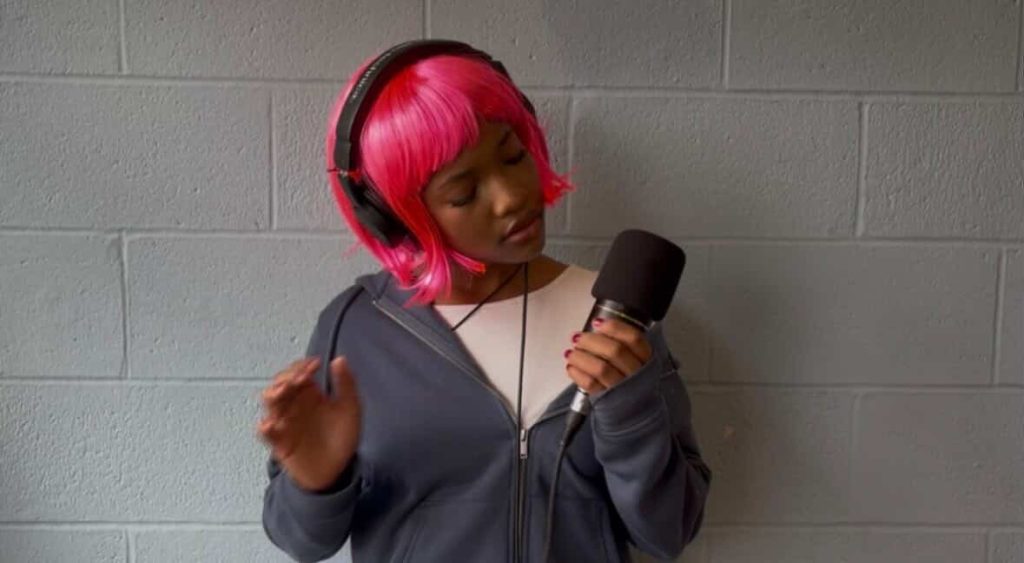
Monikers carry weight, particularly in an industry where every part of your being is seen as an extension of your brand. The first step in an artiste’s career is settling on a name. Madubuike initially considered adopting the stage name “Carmelo,” a portmanteau of her own name. In the end, she chose something more direct.
The decision for Dumebi was not as easy as it might seem, and it was thought through. “I still wanted to be in tune and in touch with my culture and my roots,” she explains. In choosing a name that reflects her identity, she resists the pressure to distance herself from her origins in pursuit of a broader appeal.
But her stage name was not the only thing that required a nomenclature. She also had a genre of music that was equally foreign to her and the Nigerian market she wanted to build a foundation with. Labels are inevitable in music, and today, Madubuike is often described as an indie artist. She does not resist the classification, but she does not cling to it either.
“I don’t really mind how people categorise me,” she says. “That’s more of a thing of interpretation.” Her music may lean indie, but her approach is fluid. She speaks of experimentation, of wanting to explore new sounds and never lose what feels true to her. She doesn’t want to be boxed in. Some day, she might make pop or rock. There are a lot of genres she is open to. For Madubuike, the guiding principle remains internal. The music she creates resonates with her first, before considering how it will be received.
The Beginning of Dumebi

Like many people of my time, I discovered Dumebi while doom-scrolling on TikTok. She stood and smiled at the camera. Then she said, “Are you looking for someone who makes Nigerian music but not Afrobeats?” There goes my attention, hook, line, and sinker. The question was a provocation and a declaration. This highlighted her desire and an early attempt to carve out space for a more introspective kind of Nigerian artistry.
Now, over a video call, I remind her of that post. Looking back, she admits the video came from a place of partial discovery. “That was kind of before I had discovered a lot more Nigerians who were making indie music,” she reflects. Yet, in a twist that feels almost poetic, the very act of asking the question opened the door she was searching for. Comments poured in, names were shared, and Dumebi had dominoed into a digital community that began to take shape.
While a community is growing online, there is also a lot happening to Dumebi offline. She occupies a space familiar to many young creatives. The dilemma of balancing artistic ambition with academic responsibility. As a second-year student studying economics and finance, she finds her quotidian hours are spent with the demands of university life alongside her music career.
“It’s not too stressful yet,” she says with a hint of humour, though she admits the shift from the relative freedom of boarding school is evident. This is because for her, this music journey started within the walls of a hostel in Nigeria, and she doesn’t miss it, but she reminisces about when things were easier.
Why were Deto Black and Bloody Civilian partying in Ikotun? Read more
Writing as Survival and Expression as a Kid
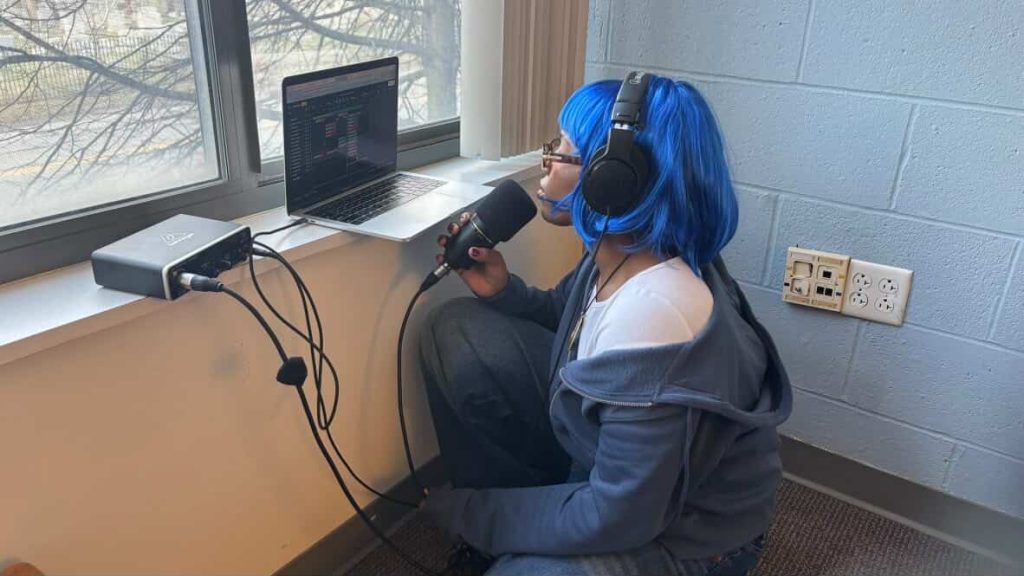
Long before the performances and online discovery, there was a young girl writing songs in the margins of her life. She traces her musical beginnings back to singing in school plays at the age of six. By her early teens, she was writing, and by fourteen, she recognised songwriting as something more than a hobby.
Boarding school, often remembered for its rigidity and structure, became an unlikely incubator for Madubuike’s creativity. “Writing music was kind of like that outlet for me,” she says, recalling the stress and intensity of the environment. The striking honesty in how she describes that period is a connecting thread to her artistry. The emotional highs and lows, the constant stimulation, all fed into her writing. An example of this can be heard in her confessional track “Skinny”, with lyrics like “Spilling from my jeans, tighter than it seems, I’m a bit too much, please cut me up.”
It is raw, bare, and might make some listeners uncomfortable, but for her, it is intimate, and writing has always been like that for her. “I feel like writing came easier when I was still in school… I was experiencing a lot more things all at once.”
Her process during that time was almost instinctive. Without easy access to recording tools, she relied on repetition, which includes singing lines over and over until they stuck. Later, with more freedom, she transitioned to voice notes, capturing melodies and fragments as they came, then revisiting them to build structure.
Her first fully realised track, “Mama’s Boy”, came later, when she was sixteen. The process was almost archetypal for a self-taught digital-era musician: YouTube beats, a notebook filled with scattered lyrics, and a willingness to experiment. “I had written maybe just the hook… and then I just kind of built from there.”
The song would eventually be released two years later, marking her official entry into the public music space. Currently, it has 15,000 plus streams, and her Spotify has an array of other tracks, including “Rite of Passage” and “Skinny”. Nevertheless, the origins of her first song, its improvised, exploratory, and deeply personal nature, still define her approach to music today.
Today, she revisits the past where she once wrote multiple songs a week; these days, time has become a more limited resource. “I don’t have as much time as I would like to write,” she admits. Still, the instinct to create remains. She continues to jot down ideas, ensuring that when time allows, she has material to return to.
Let’s talk about SINNERS and how the first scene was a foreshadowing of its surprise ending. Read more
Creating Balance and Space to Breathe
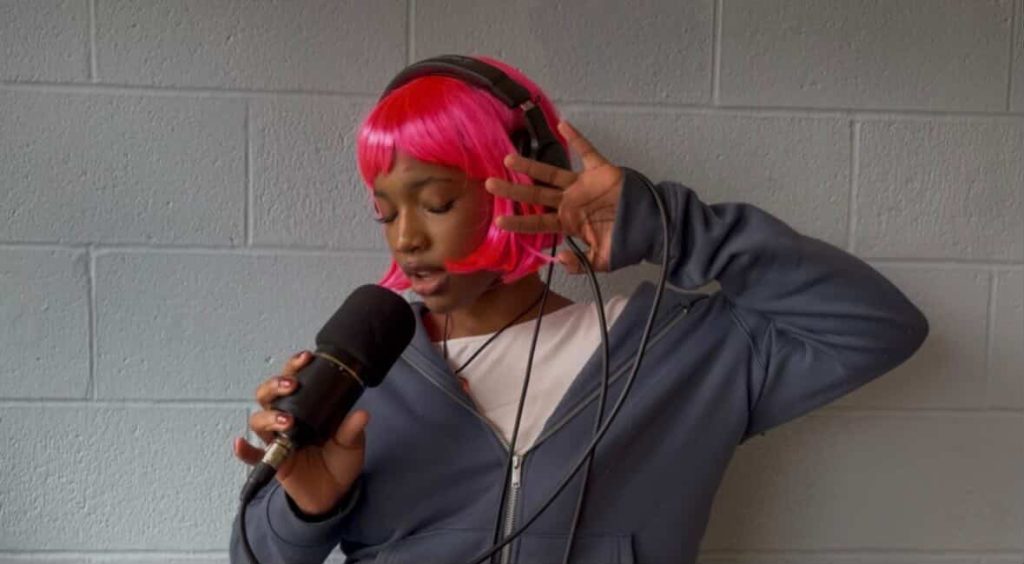
One of the more revealing moments in her journey came through a conversation with her academic advisor. He gave her an existential realisation with one question: “What do you do in your free time?” She realised the answer was singular. It was music, simply put; it was all she did.
This prompted a shift. She began to intentionally carve out space for other activities. She picked up reading, spending time with friends, and engaging with the world beyond her craft. It was a necessary recalibration, one that acknowledges the risk of creative burnout when passion becomes all-consuming.
When asked about her reading habits, it becomes clear that it mirrors her musical sensibility. She is open, curious, and selective in a different way. She is less concerned with genre and cites substance as what she seeks in a book. “If it’s good, it’s good,” she says simply, though she notes a preference for books that provoke thought over those rooted in fantasy.
Nosferatu is kinda Nollywood Y2K core. Read more.
Building a platform in a growing community
For emerging artists, particularly those working outside dominant genres, community is rarely handed to you. It is painstakingly built, and what no one tells you is that growth is not linear. Madubuike is discovering this, through moments of visibility, vulnerability, and chance, TikTok is becoming a Nitrous oxide engine for her career.
“Now I do have people that I collaborate with… most of them have found me from my videos,” she says. The casual tone belies something significant. She has a network of producers, fellow artists, and listeners who understand her sonic language. She is growing, finding collaborators who align with an indie sensibility, waiting for a breakout moment, and her shot came a lot sooner than expected.
Her First Performance
The internet gave her a community, and one day, it gave her a stage. There is no way to hide on a stage, and Madubuike prefers to rephrase this. In her mind, the stage offers something entirely different from the internet; that much is true. But what gives is as vital as it is terrifying — this philosopher’s stone is immediate, unfiltered feedback.
Performing live for the first time in December 2025 was, by her own admission, a defining experience. “My favourite thing was just seeing live reactions to my music,” she explains. It was an encounter with unpredictability. She recalls, “Some listeners were instantly drawn in; others needed time to understand.” But she expected that duality, and perhaps even welcomed it.
Looking Ahead and What’s Next for Dumebi?
As she works on a forthcoming collection of demos, something she describes as casual and experimental, her tone has a tinge of anticipation. Straight up, she says she is not chasing the idea of a “song of the summer” or tailoring her output to fit seasonal trends. “That’s not something I’m very particular about,” she says. Her focus remains on the work itself, on building a catalogue that reflects her growth and curiosity. There are plans, of course, potential performances and future releases.
When asked to name a favourite among her own songs, she hesitates. “Each song is kind of special in its own way,” she says. It is an honest answer, like her lyrics; she can’t help but be anything else.
It is her entire being, one she wears on her sleeve. She speaks thoughtfully, unhurried, and deeply personal. It is no surprise that she is staying away from labelling her music. Chidumebi Madubuike is a reminder that there is space beyond the mainstream. A space for nuance and experimentation. Sometimes, it does not have to have a name yet, and if you call it Indie, that’s fine too. She makes no promises; she only offers an expectation, one she said in the very first TikTok that widened her audience: “Are you looking for someone who makes Nigerian music but not Afrobeats?”