




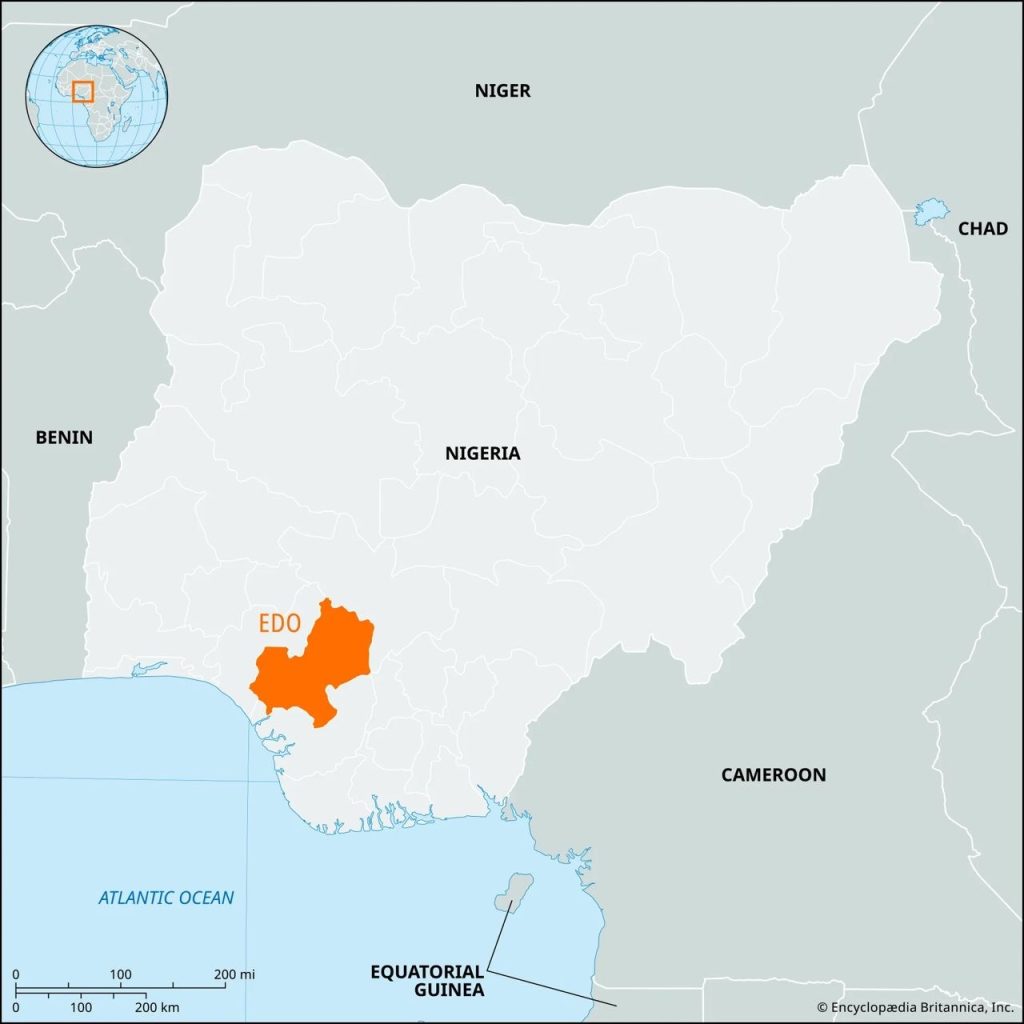
The people are leaving Ekpoma, Edo State, but not by choice; they are being kidnapped, and no one is taking accountability. It began as whispered fear in the dead of night; however, it has become an explosion of grief, anger, and resistance in a university town in Edo State.
Since the start of the new year, residents and students have been living under a constant shadow as kidnappings moved from highways into people’s homes. By mid-January, silence was no longer an option.
Speaking from the heart of the crisis, medical student and activist at Ambrose Alli University, Naz, 24, recounts a week where insecurity tipped into collective outrage, and a protest meant to demand safety spiralled into violence, arrests, and an uneasy military lockdown. “At this point,” he says bluntly, “being alive is an achievement.”
A New Year Marked by Fear:
For Naz, the danger announced itself early. “It just occurred to people that it’s like every single day since the New Year, there has been a kidnapping,” he explains. “And all of it took place inside people’s homes.” This intimacy is what truly made the difference for the community. “They’re not staying on the road anymore. They know where people live. They are going house by house to pick people.”
This fear hardened into panic after the kidnapping of a doctor well-known as Momoh. “They kidnapped him and his older brother,” Naz says quietly. “They killed him… His brother is still in captivity.” Shortly after, another doctor was abducted outside his home, which prompted resident doctors to down tools in protest. “That was when people realised this thing had crossed a line.”
The community could no longer stand by as the insecurity had consumed them. Naz, who spends his days dreading footsteps, recounts disturbing moments. One includes when CCTV footage surfaced showing a man ambushed outside his house on Ojo Street, an area largely populated by students. “He was shot multiple times,” Naz says. “His tyres were busted, but he still escaped.”
The video went viral, but the relief was short-lived. “The scary part is that it happened on Ojo Street. Almost everybody there is a student.”
The following day, another person was kidnapped on that street. Then another, the next night. “At that point,” Naz states, “it felt like they were trying to fill a quota.”
How The Protests Began:

The rise in these attacks and the silence from the government forced the city to create vigilantes. He recalls more harrowing experiences. He tells a tale of when vigilantes searching for an abducted man were forced to retreat, and the victim was shot dead. “The town erupted,” he says, “That happened around 11 p.m.,” he adds.
“By morning, people had already decided nobody was opening shops. Nobody was staying indoors. We were going to protest.” This they did.
At the market square, the body of the gunshot-slain man was placed in a coffin at the roundabout. “They put his coffin right there, in the centre,” Naz explains. “That was how the protest started.” It was the 12th of January, and protesters carried the coffin through the town, stopping at the police station and the palace of the king. “It wasn’t just students anymore. Everybody came out. I even saw one of my lecturers there.”
As the protest stretched into hours, anger spilt over. Campaign billboards belonging to the state governor were torn down and burned. “People were saying, ‘This thing you’re promising, it’s never going to happen,’” Naz recalls. “All they see is election, election, election. Nothing about security.”
Security had become the top priority for the people of Ekpoma, and they were at their wits’ end with the current situation.
However, the turning point came at the Hausa market. Longstanding ethnic tensions ignited into violence, with shops destroyed and goods looted. “Students would have just walked past,” he insists. “The Hausa people here serve students. Their services are cheaper, and they’re more honest. If it were students, they wouldn’t touch them [Hausa service workers].”
Videos reaffirm this opinion, Naz’s opinion about the students and Hausa workers. With internet clips showing students attempting to return stolen goods and calm the situation. “Some of us went there to de-escalate,” he says. “But at other places, people were hunting Hausa people. Some were saying they are bandits. People couldn’t tell the difference.”
How The Violence Turned On The Students:

Naz insinuates that there is a bias in the city’s armed forces, and the prejudice is against the locals. He explains that it was only after the Hausa market was attacked that security forces arrived in force. “The protest had already gone on for like five hours,” he notes. He speaks of other eyewitnesses who say police and soldiers opened fire on protesters. “There are videos of soldiers shooting,” he says. “They shot someone at the market square. We thought he died, but he survived after surgery.”
By nightfall, security operations moved into student areas, especially the areas near Ambrose Alli University. “They were breaking down doors,” he says. “There’s video evidence. Tear gas everywhere.” Young men were rounded up indiscriminately. “They packed about 52 people into one van. One van,” he repeats. “They drove them to Benin and remanded them in prison for 14 days.”
The arrests did not stop there. “I’m hearing the number may have gone up to 90,” he says. “Some were arrested just walking on the street.” Members of the Student Union Government were reportedly detained as well.
Shortly after, the university announced an indefinite shutdown, citing renovations. Naz scoffs at the explanation. “This is a school that resumed one week ago. They are denying insecurity, but everyone knows what’s happening.”
But Naz alludes that the university might not be the only organisation with an agenda. He adds that many theorise security forces were deployed primarily to protect the Hausa market. “Till now, police are still guarding that place,” he states, “But when people were being kidnapped in their houses, nobody came.”
Living With the Aftermath and Hopes For Change
Despite the heavy military presence, kidnapping attempts have continued. “Even on the day of the protest,” Naz says, “someone was still kidnapped. When they called the police to go to the location, the police refused, stating that it was dangerous.”
For Naz, the toll has been both emotional and physical. “A lot of my friends live on Ojo Street,” he says. “You keep thinking, ‘They could be next.’” He worries about spillover into neighbouring towns. “If they start kidnapping here, too, we are finished. Nobody will come to school.”
There’s still a tone of care for his education despite the life-threatening situation. But Naz is clear about his priorities. “First of all, those 52 students need to be released,” he says. “Imagine being in your house, minding your business, and the police break in and arrest you.”
He also fears further crackdowns. “Anytime they say they are ‘investigating,’ innocent people suffer.”
Still, he holds on to a fragile hope. “These kidnappers are not as coordinated as they look,” he insists. “They are actually afraid. But they know nothing will happen to them.” What he wants, above all, is accountability. “If people start seeing consequences, the kidnappings will reduce.”
As the town waits for answers, its streets remain tense, its schools closed, and its young people caught between fear and defiance. What is unfolding here is beyond a student protest. It reflects the beginning of what happens when insecurity is ignored, until the people are left with nothing but their voices and decide to use them.
Note: On the 16th of January, it was announced that the students had been released, and Naz verified the information.
Read also: Broken System? How JAMB Is Failing Nigeria’s Youth.