

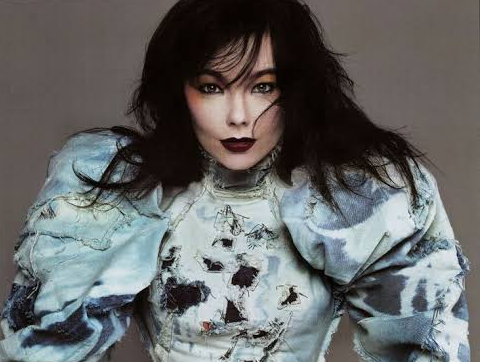

The theatres were dominated by action movies like Gladiator and Mission: Impossible 2; the PlayStation 2 became the best-selling video game console of all time; and let’s not forget that the world had just survived the now-infamous Y2K bug; the year 2000 was nothing short of entertaining.
While many sat at home and watched the inner lives of people, as the cultural phenomenon “Big Brother” had just launched in multiple countries, renowned designer Alexander McQueen looked outwards for the inspiration of his Autumn/Winter 2000 collection. This is a common practice among designers, and heaven knows the nation of Greece should get royalties from all the collections their mythology has inspired. But Alexander McQueen’s references crossed the Eastern Mediterranean region and made their way into Africa.
Want to read about a fashion show in Africa? Here
Eshu by Alexander McQueen
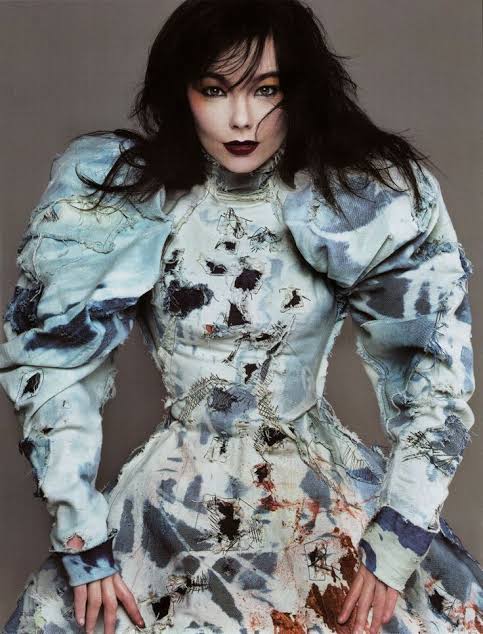
The collection titled “Eshu” mostly draws its spark from the West African tribe “Yoruba”. As the name suggests, the Yoruba deity of trickery, chance, judgement, duality and languages, “Eshu” was a major influence for McQueen.
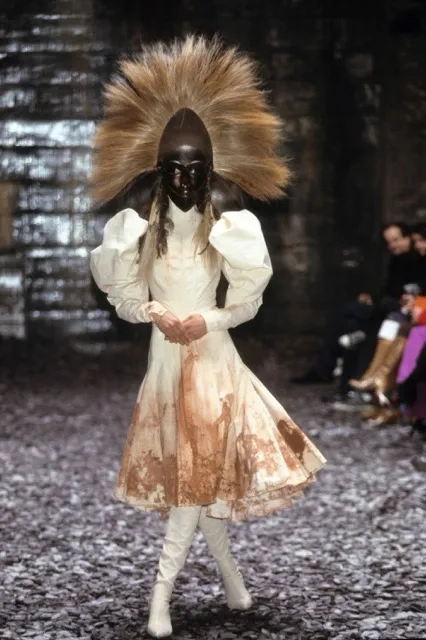
As the runway show starts, the garments hint at traditional Yoruba symbols, such as scarification and beadwork. Moreover, with attention to detail, the collection utilises “horsehair” as a design element. This animal fibre is most famously used to craft the Ìrùkẹ̀rẹ̀, a sacred royal fly whisk that serves as a profound emblem of authority, dignity, and divine leadership.
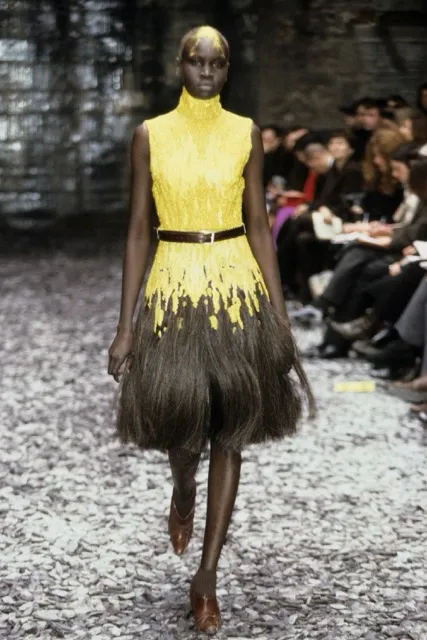
Still on an African note, the accessories were pulled from other African tribes, with Mursi lip plates and East African metalwork details. This eclectic mix of African traditional designs was met with criticism as recently as in 2025; Ayerhs magazine describes it as “…moments of brilliance, yet also felt jarring and disconnected.”
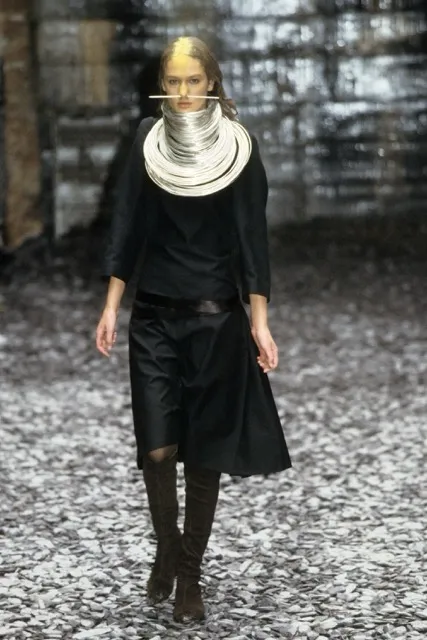
Scholar Anjali Vats argued that McQueen’s African-inspired collections prioritised “appropriating oddities, stereotypes, and wild animals” over meaningfully addressing racial dynamics, viewing them as symptomatic of systemic cultural appropriation in fashion.
Eshu A/W 2000 was as divisive as the deity
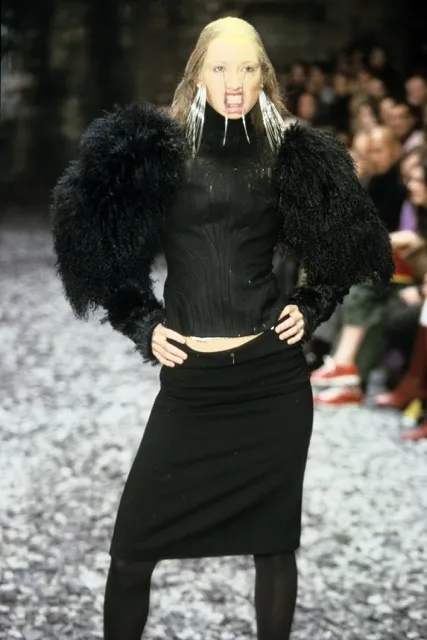
The major backlash the collection faced was less about whether this was an example of appropriation or appreciation on McQueen’s part, and more because of a certain mouthpiece that forced the lips wide open.
According to its Wikipedia page, “Eshu drew a varied reception from contemporary critics, and retrospectives differ in their assessment of the critical consensus.” The author Andrew Wilson and several female critics, including Joanna Pitman, Joan Smith, and Brenda Polan, believed “the show to be symbolic of a deep-seated misogyny”.
However, time has been kind to Eshu A/W 2000, and by the 2010s, critics were revising their stances. Andrew Wilson suggested that the inspiration for the graphic nature of McQueen’s work was seeing his elder sister suffer domestic violence as a child.
It’s also gained a cult following, with photographer Nick Knight and journalist Susannah Frankel saying that the infamous mouthpiece was a portrayal of aggressive women who were meant to scare you, and not misogyny.
What were Alexander McQueen’s intentions with this collection?
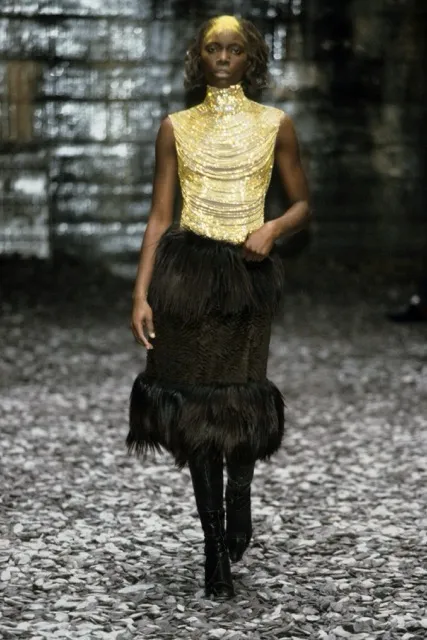
By his own account, he said, “[I try to] push the silhouette. To change the silhouette is to change the thinking of how we look. What I do is look at ancient African tribes, and the way they dress. The rituals of how they dress. . . . There’s a lot of tribalism in the collections.”
- Purple Fashion, Issue 7, Summer 2007
He was also rumoured to have said, “I didn’t want it to look like a cliché of Africa. It was about the energy of the trickster, the idea that something can be beautiful and terrifying at the same time. Eshu represents the choice at the crossroads, and every time I make a collection, I feel like I’m standing right there.”
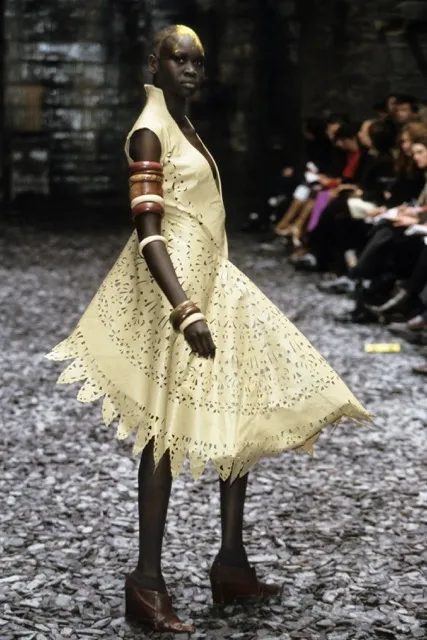
The Scottish designer known for loving to cause discomfort — his A/W95 collection “Highland Rape” is still a discussed topic — was exploring themes of raw power and when Western commercialism is thrust upon it.
The outfits mirrored this duality through contrasting styles like embroidery juxtaposed with coarse raffia or Victorian tailoring set paired with raw wooden masks, and severe leather harness work combined with flowing textiles.
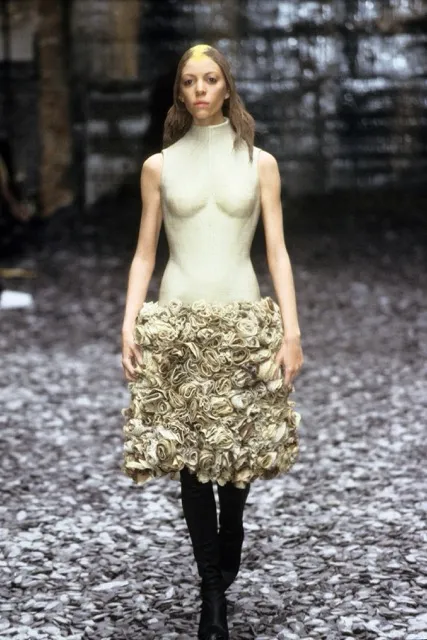
The collection captures the high-stakes pressure McQueen felt at the turn of the millennium, as he was balancing his responsibilities at Givenchy with his own eponymous brand. Eshu (A/W 2000) was McQueen’s attempt at channelling ancient mythological energy into a commentary on modern human complexity.
The answer about if he accomplished this varies from person to person. Nevertheless, the collection is a haunting and brilliant reminder that fashion has an ability to provoke, challenge, and inspire profound emotions and storytelling.
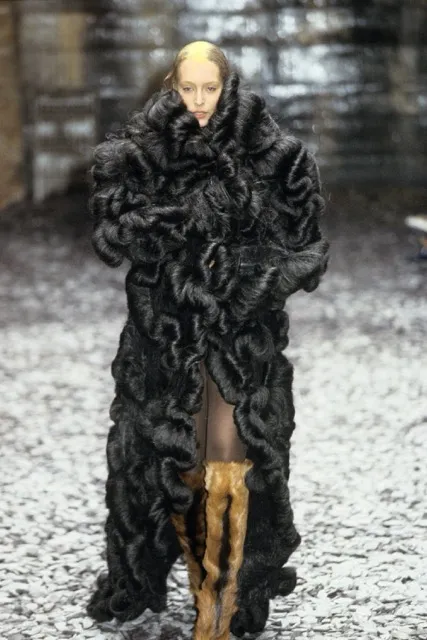
View more images from the collection here.
If you like this article, you’d definitely love: Abuja Might Be The Capital, but It Certainly Isn’t A Fashion Capital, and Might Never Be
Or learn about the growing subculture in Northern Nigeria: What Is Alté Connect? Kaduna’s First Alté Convention