
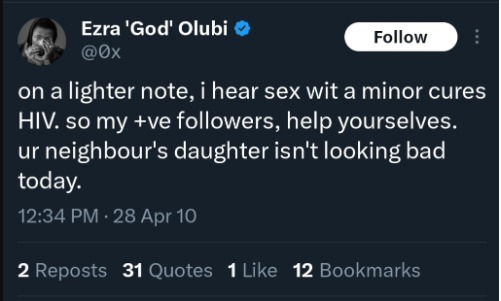
We are constantly told to “watch your digital footprint,” but no one ever explains just how long the internet’s memory truly is. That is probably because they can’t. Fame is intoxicating, and with fame comes constant scrutiny, surveillance, as well as strangers ready to dig into your archives. Once a post is released to the web, it becomes fair game.
If there is ever a constant in the equation of the internet, it is that its darlings are as prone to cancellation as a Victorian child to tuberculosis.
There Are Always Receipts
The digital world has crowned and dethroned countless personalities over the last decade, and cancel culture has become an unavoidable part of the vocabulary. Everyone wants to be adored online, and facades are put in place to ensure that. But what happens when the same crowd that sings your praises turns around with screenshots?
We post; sometimes mundane things, sometimes troll content, other times things we would’ve left in the drafts, and in the moment, it feels harmless. But the truth remains: The internet never forgets. Old jokes, thoughts, versions of ourselves sit quietly, waiting for the right scandal to revive them. Oftentimes, deleting hasn’t saved the day because someone somewhere probably took a screenshot before the post was deleted.
The latest scapegoat of the internet’s immaculate memory is Paystack’s co-founder, Ezra Olubi – known on X as “Ezra ‘god’ Olubi. Over the last week, Nigerians have gradually watched abuse of power and sexual misconduct allegations against him unfold in real time, along with damning old tweets of his. Following this series of events, Paystack initially suspended him pending an internal review and subsequently terminated his employment.
However, to understand why tweets from 2010-2012 are resurfacing, we have to start at the beginning.
Read also: This is the experience of bein’ a 14th-century whore.
The Genesis
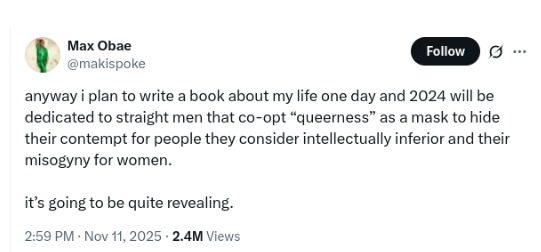
We can trace the beginnings of the conversion to a cryptic tweet made by Max Obae, a Nigerian-born American financial professional and venture capitalist based in New York, on November 11, 2025. Seemingly reviving an old conversation about the “wickedness of wealthy Nigerians towards their domestic staff.”
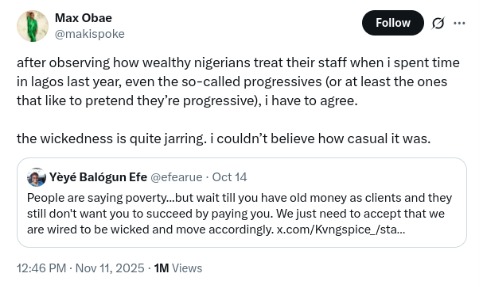
Obae then followed with a thread of other tweets, leading X users to speculate that the individual in question was Olubi.
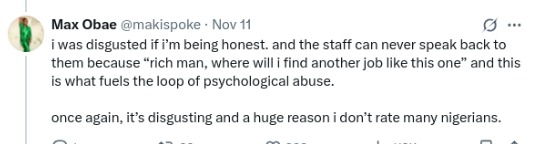
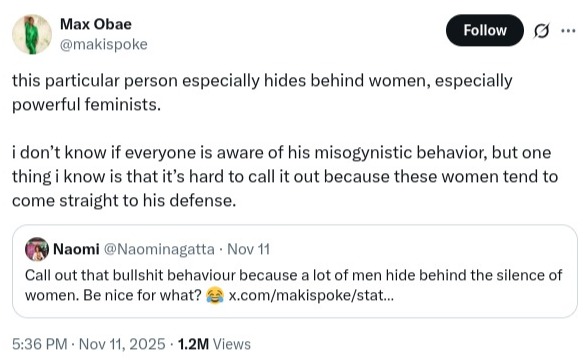
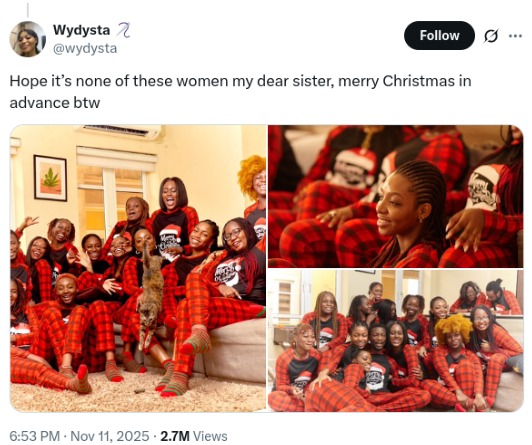
Olubi is known for his quirky personality and is good friends with many of the big names in Nigerian Twitter Feminism. An X user responded to the above tweet by providing images from December 2024, showing Olubi and his female friends in matching Christmas pyjamas.
Obae tweeted shortly after her initial post, further alluding to the identity of whom the tweet was about.
Multiple reactions have followed her exposé, and it is relevant to note that Obae, her wife, NK, and Olubi were previously involved in an amorous relationship, forming a polycule.
However, one of the foremost narratives is that Obae is on a smear campaign against Olubi, after their relationship came to an end.
On November 12, Obae made further allegations against Olubi, which garnered widespread traction not only because of the magnitude of the allegations, but also the irony of the timing. Olubi celebrated his 39th birthday on the same day.
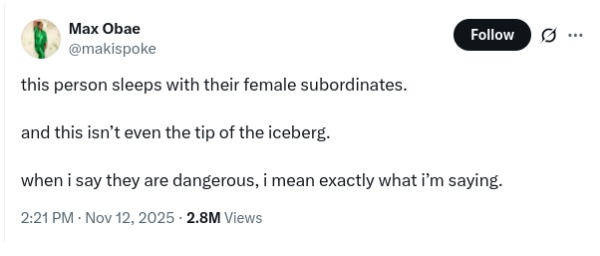
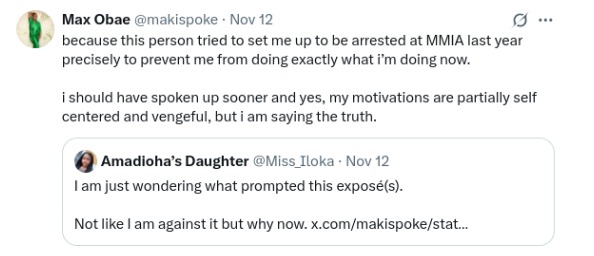
Obae accused Olubi of trying to silence her via an orchestrated arrest, and she proceeded to host a “tell-all” space on her X profile. In it, Obae admitted to receiving financial aid from Olubi to pay for her father’s burial and a loan to fund her brother’s tuition, which was agreed would be paid back in November 2027. She also recounted her experience watching him abuse his domestic staff, along with her claims on workplace harassment, and alleged that Olubi tweeted from a burner account as X user @Akeemkeeme.
Obae’s space provided fodder to the fire, and netizens went digging in Olubi’s archives, unearthing what can only be described as horrifying. Olubi’s archives revealed multiple tweets about pedophilia, bestiality, and sexual harassment, which would’ve no doubt been called out in this present age, but then again, it tells us a lot about the Twitter climate in that era.
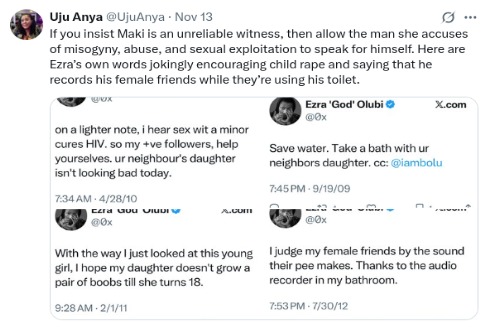
By the evening of November 13, Olubi had still made no comments towards the unfolding drama and deactivated his X account (@0x). The incident spread to other social media platforms as people began to make unverified conjectures about his older Instagram posts. Following the negative traction and allegations, Paystack publicly announced his suspension on Friday, 14th November, pending a formal investigation.
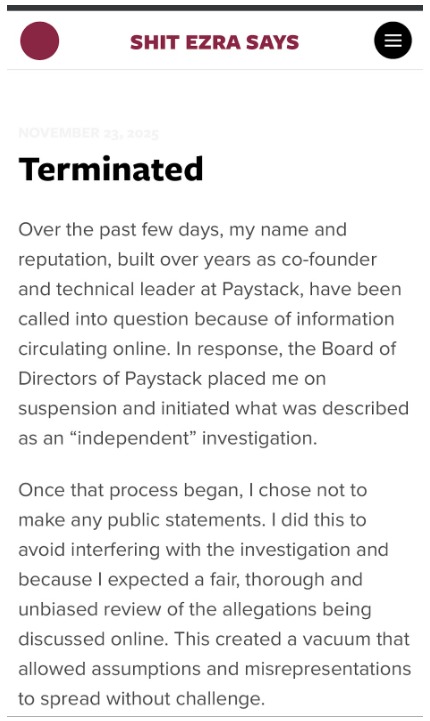
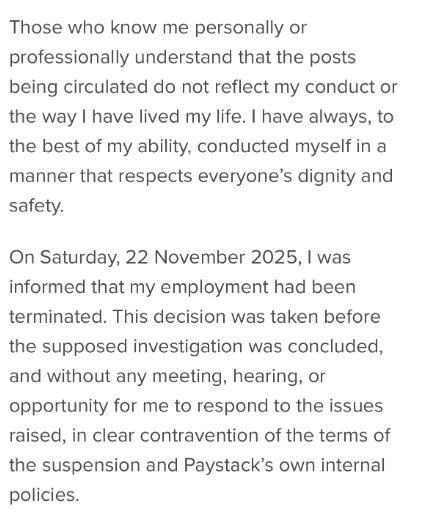
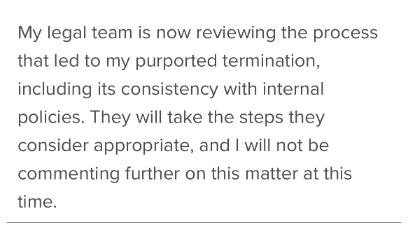
Exactly nine days after Paystack announced his suspension, Olubi publicly commented on the state of affairs via a November 23 blog post. He announced that Paystack had terminated his employment and alleged that the decision was taken unfairly.
Before his termination, Olubi was a board member and the sitting CTO of Paystack. He has confirmed that his legal team would look into the circumstances further, but Olubi would be going up not just against his brainchild-Paystack-but also its parent company, Stripe.
The Feminist Witch-hunt
The Nigerian feminist community has also taken hits from the turn of events, given Olubi’s proximity to feminist stalwarts who have derided people for less. In some cases, the conversation has shifted from Olubi’s alleged misconduct to the responses (or lack of) from the activists. X users had called on notable members of the community, who are also identified as friends of Olubi, to speak out about his conduct, accusing them of being “silent”. In return, some of them had spoken on their stance regarding the issue.
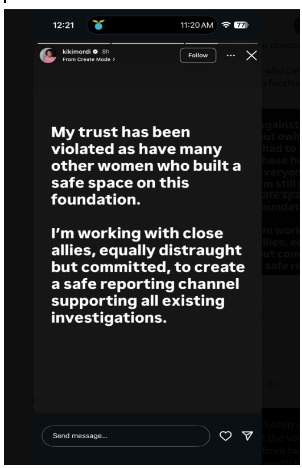
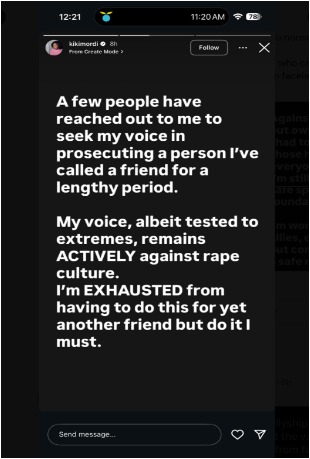
Past tweets from activists like Uloma (@ulxma) have been scrutinised for missteps, amplifying the irony of calling others out at other times while navigating the same unforgiving timeline.
Obae also made allegations of Olubi funding the popular feminist organisation Fem Co., and they, in turn, shielded him from accountability.
In exposing Olubi’s past and personal life, some of the very voices known to demand accountability from men now wrestle with public scrutiny. Amid calls for accountability, a couple of Olubi’s known feminist friends released statements which X users have described as “political” regarding their stance on the issue:
Kiki Mordi and Ozzy Etomi, in particular, were called out by X users for allegedly distancing themselves from his “atrocities” despite their public feminist stance. In an interesting turn of events, Obae released screenshots of past private conversations between herself and Etomi after Etomi had denied being friends with her.
Does Time Erase Accountability?
In this digital age, hardly anything posted on the web truly ever vanishes. The social media network makes it possible for old, forgotten content to resurface, tarnishing an already existing reputation. Allegations resurfacing years after the fact raise a fundamental question: how long does accountability last? Legally, statutes of limitations can prevent prosecution if too much time has passed and if there are prosecutable charges.
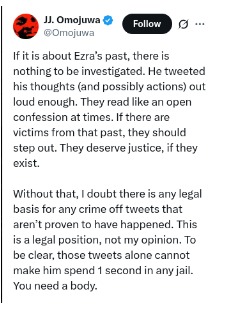
But what exactly is too much time?
According to the Nigerian legal system, that would be roughly 10 years, assuming the case was defamation. It’s important to note that the period of time varies by the offence committed.
However, moral accountability—the court of public opinion—doesn’t follow a calendar. On social media, past actions, jokes, or misconduct can be unearthed and scrutinised indefinitely, forcing individuals to answer for behaviour long buried.
Not too long ago, a pastor was called out on X for tweets he made years ago alluding to rape and his support for it, drawing polarising opinions from different groups. One group believed that people change, and as such, we shouldn’t judge by their past behaviour or, in this context, tweets. However, this is a very nuanced take. While it is a given that people change, the grace for public forgiveness is determined by the context of the sin committed.
In Olubi’s case, tweets from 2010–2012 are resurfacing more than a decade later. Legally, some of the tweets may not be prosecutable, but the workplace harassment claims are still within the realms of investigation, socially and culturally. The difference being that for the tweets, there hasn’t been any hard evidence outside of what was posted. Some quarters may argue that he was only tweeting intrusive thoughts.
The sexual harassment allegations, however, have the potential to leave behind a much clearer paper trail if victims step forward. A criminal case can only be charged if the relevant legal authorities find sufficient evidence of a crime under applicable laws. As of now, the consequences have been employment-related, not legal prosecution resulting in jail time. Despite this, the pressure to respond to said tweets remains relentless. This tension reflects a modern reality: in the digital age, the past is never truly past.
Broader implications
The recent revelations have also brought to the forefront questions on accountability and background checks for leaders, public figures, and the like. A common question gaining traction within the social media sphere is, “How was Ezra Olubi awarded a national honours award without a background check?”
But the answer to this question lies in the calibre of people awarded the honours before him. In the past, Nigerians have pointed out that undeserving individuals have been awarded national honours status, and this brings an interesting question to the forefront: Should we strip people of their contributions because we hate their morals? Or do we reward their intellectual capabilities and contributions over their morals? Again, for the broader society, the answer isn’t as clear-cut. This presents a modern-day version of the trolley problem, once more questioning ethics vs morality.
The Scandal goes beyond the shores of Africa, as Paystack was acquired by Stripe, a US-based Irish-American multinational financial services company, in October 2020. The nature of the allegations exposes not just Paystack, but Stripe as well to reputational damage and legal action.