
When I said to myself in 2024 that I’d be attending Lagos Fashion Week the following year, I don’t think I put much thought behind it. Fast-forward to October 2025, and there I was buying LFW tickets with a few dollars and a dream.
Lagos Fashion Week has long since cemented itself as a leading authority in the African fashion scene, drawing designers from all over the continent and even garnering attention from other continents. This year marked 15 years since its inception and, as every year, provided an opportunity for new designers to debut and returning designers to show off new collections.
Driving into the Federal Palace Hotel, the buzz was electric. True to my African roots, I was hours late, but you couldn’t tell. The show was already underway, but the scene outside carried its own kind of energy.
Late guests strutting in with phones glued to their ears, Managers ushering their guests to outfit changes, a giant glowing Heineken star at the center of it all (they sponsored the event, so they had to be everywhere), brand representatives jostling to get guests to take a picture at their stand, and then the innumerable company of camera crews clicking at every turn.
By default, I dress for comfort. I appreciate fashion, but dressing up feels like a full-body workout. My friend Nazam had warned me: “Dress nice. This is fashion week, not your comfort zone.” She was right. I’d spent an entire week agonising over what to wear, but the second I stepped onto the LFW tent grounds, the fact that people plan months and weeks for their outfits hit me.
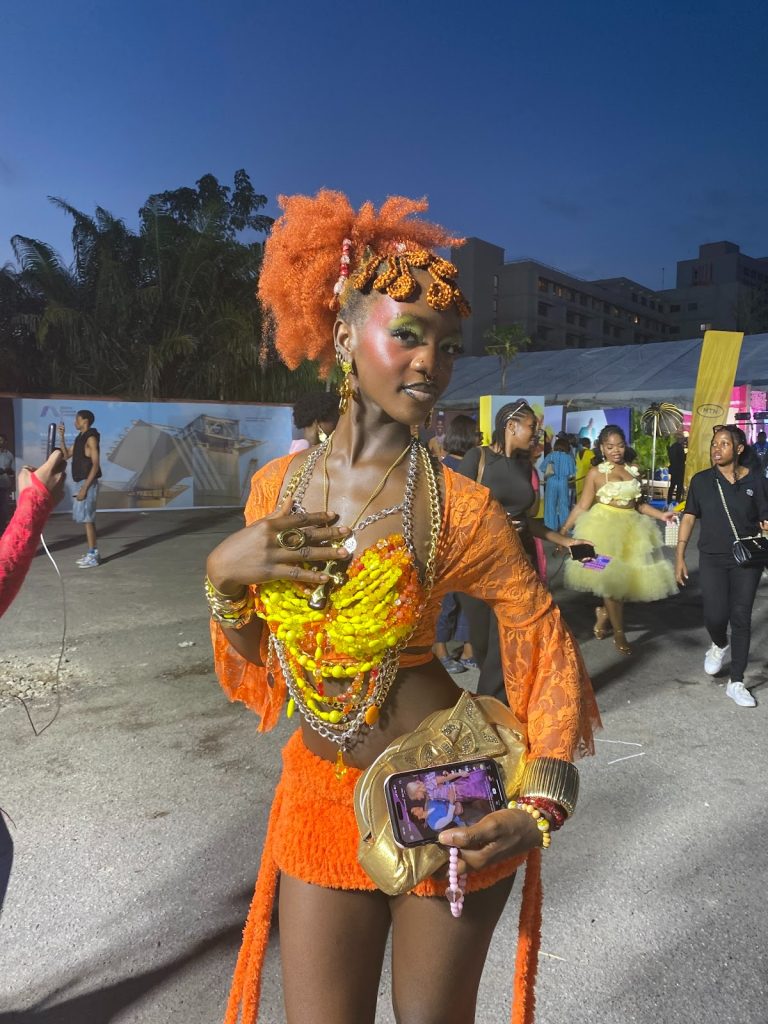
The outfits were everything and nothing I expected. Bright pink gele and tie combos. A raffia jacket set. Plain jeans and a tee. Full leather in the humid Lagos heat. Proving that when it comes to style, it’s not what you wear, but how confidently you wear it. Everyone seemed to know exactly what they were doing, where to stand, and when to look unbothered.
Friendly advice: Eat before going. I had been warned there’d be no food, no snacks, and no vendors, so I ate before coming. Turns out, it wasn’t an exaggeration. There really wasn’t a morsel in sight.
For Saharan Style, I had interviews to chase, and to my surprise, everyone was lovely. I’d prepared for polite rejection; instead, people were warm, chatty, and even encouraging. It could be that fashion makes everyone polite, or maybe it was the adrenaline.
Read also: So We Caught Up with Ciara at Lagos Fashion Week
Inside the Lagos Fashion Week Tents
The atmosphere inside the tents was different. Inside, everything changed. The noise softened, and everyone watched as the models catwalked.
I entered just as Studio Imo’s models made their exit, catching the tail end of applause before the next designer began. The Dimeji Ilori collection’s opening was a sensory performance.
As a physiologist, my days usually revolve around bodies in a very different sense: oxygen levels, ECGs, and blood pressure. Here, it was still about the body, albeit in a different light: how it moved, commanded attention, told stories in fabric instead of anatomy. Under dimmed lights, a model emerged, her raffia cape’s reflective material glowing like eyes peering from the dark. It reminded me of Aku, the primary antagonist in the Cartoon Network show Samurai Jack.

As the lights lifted, the full outfit came into view. This opening was hands down my favourite opening of the night. The entire collection did not disappoint either. Dimeji Ilori played around with bold colours, texture, and raffia, paying homage to his Yoruba origins.
Boyedoe’s “Paradise Regained” collection repurposed jeans, but what caught my eye was his brown hues. Structured and sustainable fashion was what he projected.
Imad Eduso opened with a talking drummer and featured models of various body sizes, highlighting inclusivity in fashion, challenging the saying “models are meant to be hangers”.
Lila Bare, returning to LFW for her third season, stole my heart with her warm, earthy tones and cowry shell detailing.
Then came Fruché. To understand his genius, you have to talk about the music. A friend once told me that sad scenes in movies are sad because of the soundtrack. Without it, it’s just acting. The same goes for the runway. Fruché opened with Princess Njideka Okeke’s Akanchawa, and suddenly, phones went down.
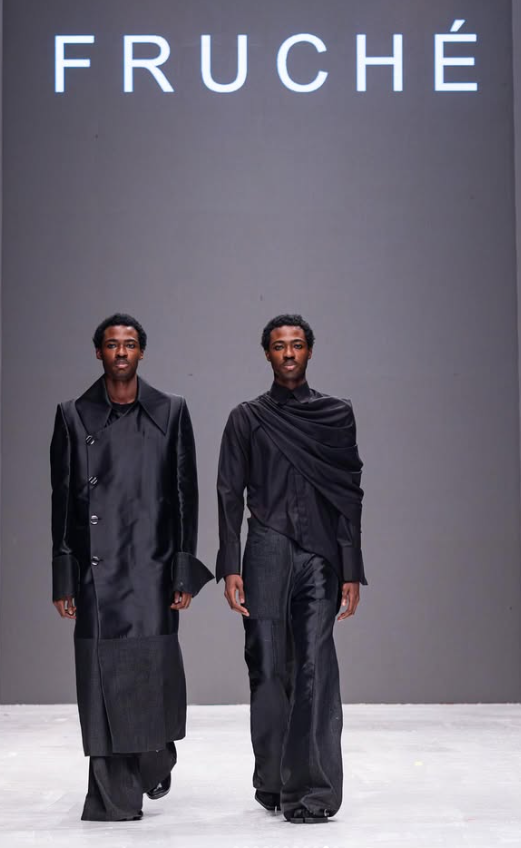
People were talking, smiling, and paying attention. He evoked a general sense of nostalgia with the audience. Then came the final. Ciara walked the runway in a red gown with bow sleeves and a gele to match, and the entire tent collectively lost its mind.
Lessons from the Tents
Between shows, I realised the event is like observing a living organism. Every part in motion: people leaving to attend off-site shows, struggling to move before the intermission is over, phones pulled out to update socials, the poised fashionista onlooking, the press taking pictures of every outfit. Everyone moves with a certain purpose.
By the end of the night, I was tired and dreading my shift the next day, but buzzing. The kind of tired that feels earned. I witnessed something worth staying up for. Fashion, I realised, is not just about clothes. It’s self-expression, community, and above all, it’s another way of studying the body. One, I think I might enjoy examining a little more closely.