

Nigerian popstar, Tiwa Savage, is neither Tyla’s elder nor countryman. She has not shown adept knowledge of the topic that is South African history, nor is she expected to. Savage comes from a country in the Western Hemisphere of Africa, categorised by its sand, rainfall, and hilly terrain; Nigeria is thousands of kilometres away from South Africa, and its history highlights this.
Tyla comes from a country with a complex racial history, and Savage from one where no one can pronounce Nelson Mandela’s birth name. Yet, the hosts of the Breakfast Club asked Savage about her take on Tyla and the racial discourse surrounding her. Furthermore, Tiwa Savage “apologised” on her behalf.
There’s a case of Savage speaking over another ethnicity; however, the question in itself was questionable. Africa’s not a monolith, and Nigeria has no geographical ties to South Africa; neither shares its apartheid history nor racial classification. Ultimately, Savage’s perspective would still be that of an outsider. So, why was this question asked during the interview?
EVERYONE WANTS A PIECE OF TYLA:
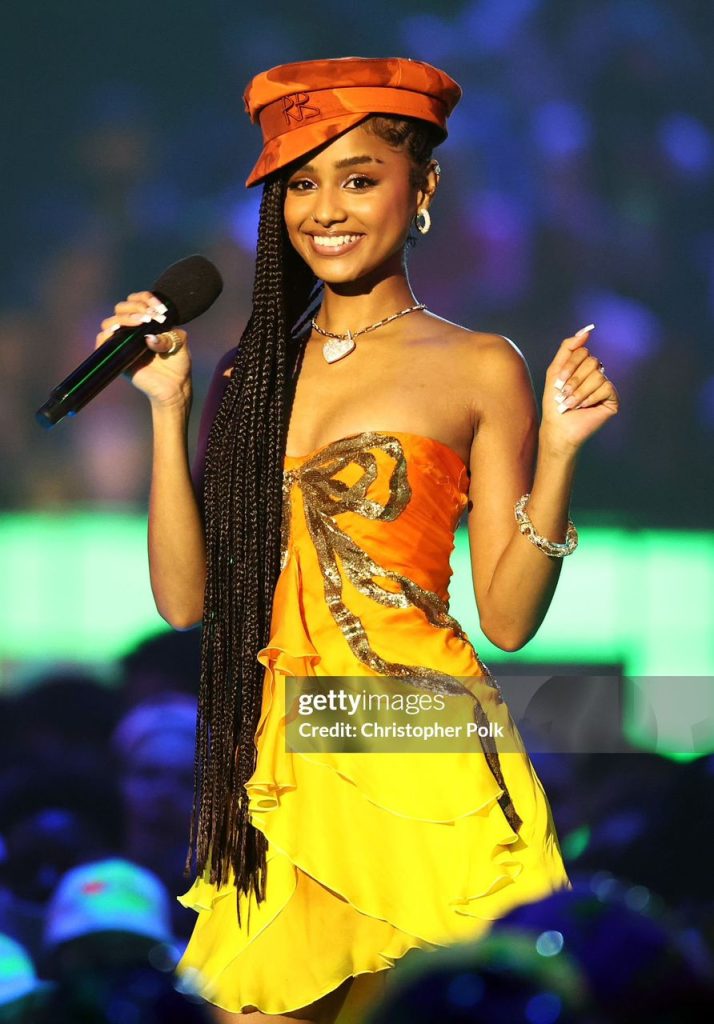
In many ways, Tyla’s story is the classic Pop girl archetype; she’s young, sings, dances, and sometimes comes off as sassy. Now, she is being judged for basic actions, and every interview hopes to become a headline where she slips up. Almost Barbara Walters-esque, but like Tyla’s 2025 Coachella outfit, it is not intentional that this playbook keeps recycling. After all, the one thing they love more than a pop girl… is to see a pop girl fail, fall, die trying.
The guillotine the public has chosen for Tyla is laced with xenophobia and allegations of internalised racism. Akin to a Nelson Mandela effect, a grand portion of TikTok woke up and decided that Tyla said, “I am not black, I am coloured.” Defenders of this claim have been unable to provide substantial evidence, and the South African singer has been on record saying otherwise.
In one of her first international cover stories, Cosmopolitan, Tyla is quoted as saying, “I never said I am not Black. It’s just that I grew up as a South African knowing myself as Coloured. And now that I’m exposed to more things, it has made me other things too. I’m also mixed-race. I’m also Black.” This statement predates the backlash and her June 2024 interview with The Breakfast Club.
It’s no different from what Trevor Noah expressed when he joked that his favourite part about coming to America is that he gets to be Black. He is never called to explain himself repeatedly, nor is it dangled over his head. Tyla has not been given the same treatment. In fact, she constantly asked about the racial classification in South Africa, and two months after her Cosmopolitan cover hit shelves, Tyla decided to stop answering.
She hoped to recenter her music, as she’s a dance-based act, not a platform for half-baked discourses on race and ethnicity. This didn’t work out because her following interview was the infamous one on The Breakfast Club, where Charlamagne tha God questioned her about her identity, and she declined to respond, only looking to her agent, who urged ‘tha God’ to skip the question.
It was bold and assertive, resulting in the modern complications of Tyla. But it was freeing because after the ordeal, she made a ‘Notes App’ post on X(Twitter) and has never been publicly asked about it again.
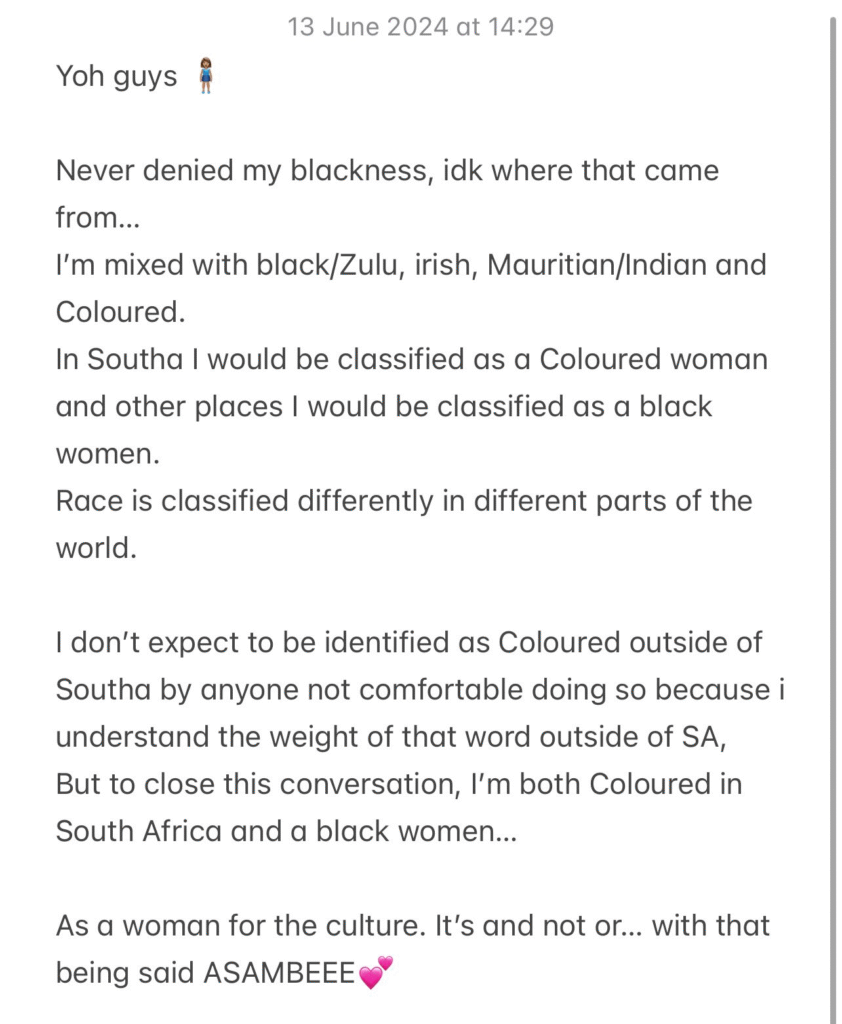
Of course, her post did nothing to appease the angry mob, calling her a self-hating black. But it prevented any self-respecting establishment from doing so because saying, Tyla said she isn’t black, would be misinformation.
Nevertheless, a year and three months after Tyla stood firm in her decision not to entertain this, Tiwa Savage was called to answer for it.
IF WE ARE TALKING ABOUT APOLOGIES, TIWA SAVAGE DESERVES ONE:
In a recent clip from The Breakfast Club, Tiwa Savage is asked, “You’re from two different places, but when the coloured conversation was happening with Tyla, from your perspective, how did you feel about the conversation and just how she handled it, people’s reaction?”
Savage acknowledges her ignorance of the origin of the conversation, as well as understanding that in South Africa, Tyla is classified as coloured. She expressed that she knows why Americans would be sensitive about the term ‘coloured’, yet empathised with Tyla. A solid answer in itself for someone with no skin in the game. But she went on, and eventually said, “Where we are from, where I am from, when something like this happens, they say the elder will come and say on behalf of such is such, we apologise.”
She goes further and ends the note with, “I would like to say, you know, like, on behalf of that, her or whatever, like we apologise. We didn’t mean it, forgive us.”
No, that’s not French, Savage said, we. The apology didn’t sit well with the viewers for a multitude of reasons, particularly because she is not in a position to do so. Then, during her set for Global Citizen Festival, Tyla sang, Sorry I’m not sorry, while performing her track, Mr Media. Many took this as a response to Savage and an end to that chapter. But since we are on the topic of disrespect, there is the question itself.
Tiwa Savage (born Tiwatope Omolara Savage) is an established Nigerian singer who has background vocals on Whitney Houston’s album I Look to You, and has written songs for Babyface, Kat Deluna, Fantasia, Monica and Mýa. Her discography includes Afrobeats hit songs such as Ma Lo, Eminado, and Love Me 3x. In 2023, she made history as the first Nigerian to perform at a British royal coronation celebration, when she serenaded guests at the Coronation Concert for King Charles III and Queen Camilla. In other words, Tiwa Savage is the Beyoncé of Afrobeats; she also has a track on Beyoncé’s soundtrack album, The Lion King: The Gift.
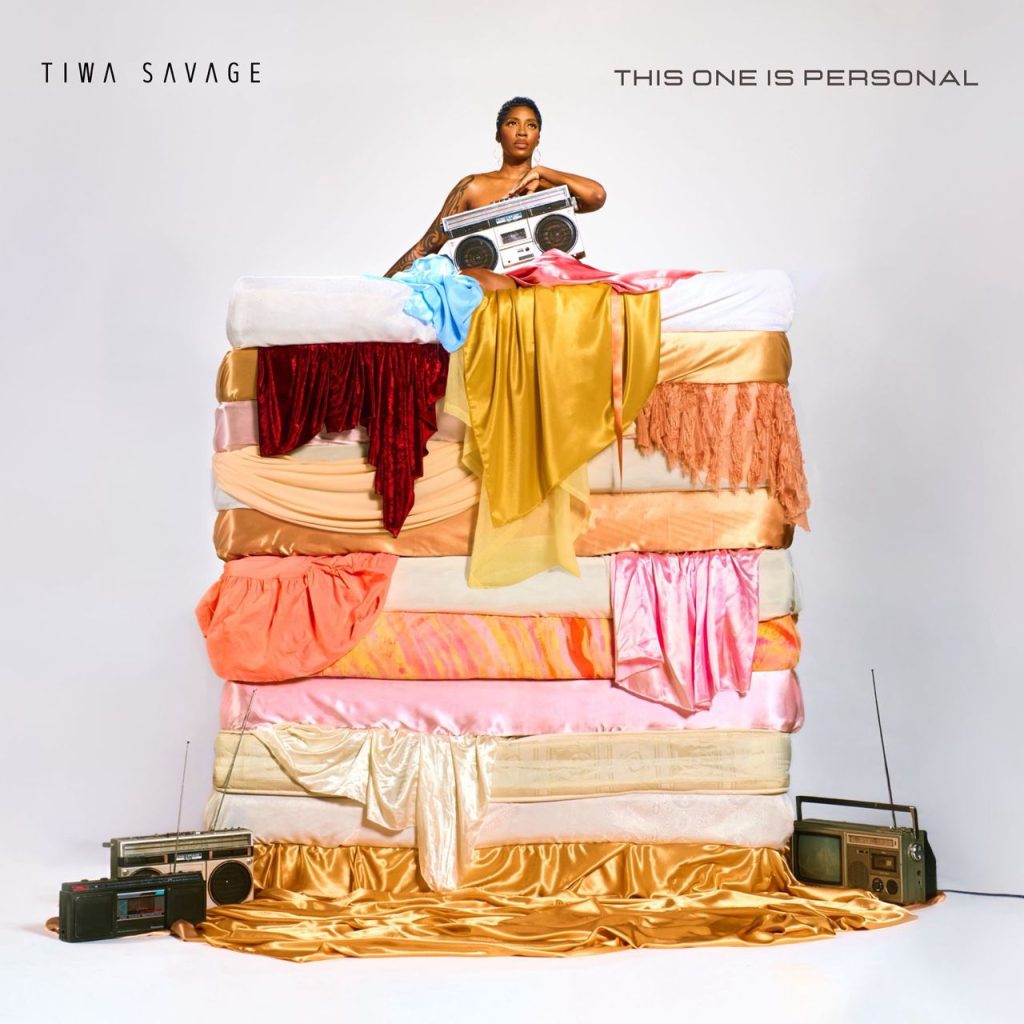
On the 28th of August, Savage dropped her fourth studio album, “This One Is Personal.” Since its debut, she has been on a press tour to promote the project. She went to The Breakfast Club for the very act of publicising the album. While the interview does go in-depth about the project, now the headline reads, “Tiwa Savage slammed after apologising for Tyla’s ‘coloured’ remarks on The Breakfast Club.”
Yes, I am saying that asking Tiwa Savage, a prominent figure in Afrobeats, about Tyla’s racial identity was not just misguided but also disrespectful. Such questions can hijack an artist’s achievements and contributions, reducing their presence to mere subjects of controversy.
Tiwa Savage, as a renowned musician, deserves discussions that do not force her into a position of proxy spokesperson for complex racial dialogues that are outside her experience. The expectation for her to weigh in on Tyla’s situation reflects a misunderstanding of both the nuances of identity within Africa and the need to respect the integrity of African artistes. Savage has had a lot of political controversies in her bag, enough to fill the run time. She practically defied the conservative restrictions on female Afrobeats pop stars in the 2010s. How does she feel about that now? Is she sorry?
Although the interviewer did acknowledge that Nigeria and South Africa are separate countries, the question put Savage in an uncomfortable position. She had to offer insight into a situation in which she is also a foreigner.