

Januarys are slow for most people. The dusty skies from Harmattan and the post-holiday fatigue make people reluctant to resume a work life. But things are a bit different for the stylist Gabriella Nasky, “Naskii”; it has been 15 days into the new year, and she has already found herself on the right side of the internet.
Nasky became, no, earned an internet darling status by playing a key role in the visuals for the hit song by Dave featuring Tems, Raindance. With looks from Tia Adeola, Sonma, Seta The Label, Lisa Folawiyo, Unrefyned, and Oríré, the Raindance video might read as her at the top of her game. But for her, it is one big step into her year, and she has a lot more steps in her career. So, how does one get to style the most discussed music video of 2026?
Read more on the fashion week where Tia Adeola’s SS26 was held in Lagos here
Making of Raindance
Across the phone, Nasky begins to relive the moments that led to Raindance. She’s calm, and there’s a sense of happiness in her vocal pitch; she is proud of her work, and honestly, she’s glad about the internet’s reception towards it. In its way, it’s a reward, but beyond that, it is an insight into how her career is perceived.
She laughs as we discuss the misconceptions, “So funny enough, right, a lot of people don’t know the pressure that comes with styling music videos. Most times, we are not given enough time to work.”
She explains that rarely is there a week’s notice, and most gigs manifest under tight hours. “Raindance happened in less than 48 hours,” she states, “I got the call on Friday morning, got a meeting Friday afternoon, started working on it, you know, next thing is Saturday. The interesting thing is that most of the time, the director knows what he wants. But for Raindance, we technically had three directors.”
She laughs at the thought of her words being misconstrued, so she decides to explain further, “Directors know what they want their set to look like, and they know what they want from the models. It’s not very, oh, they should wear this, they should wear that. A lot of times, sometimes it is because they want it to be coherent with how the set looks.”
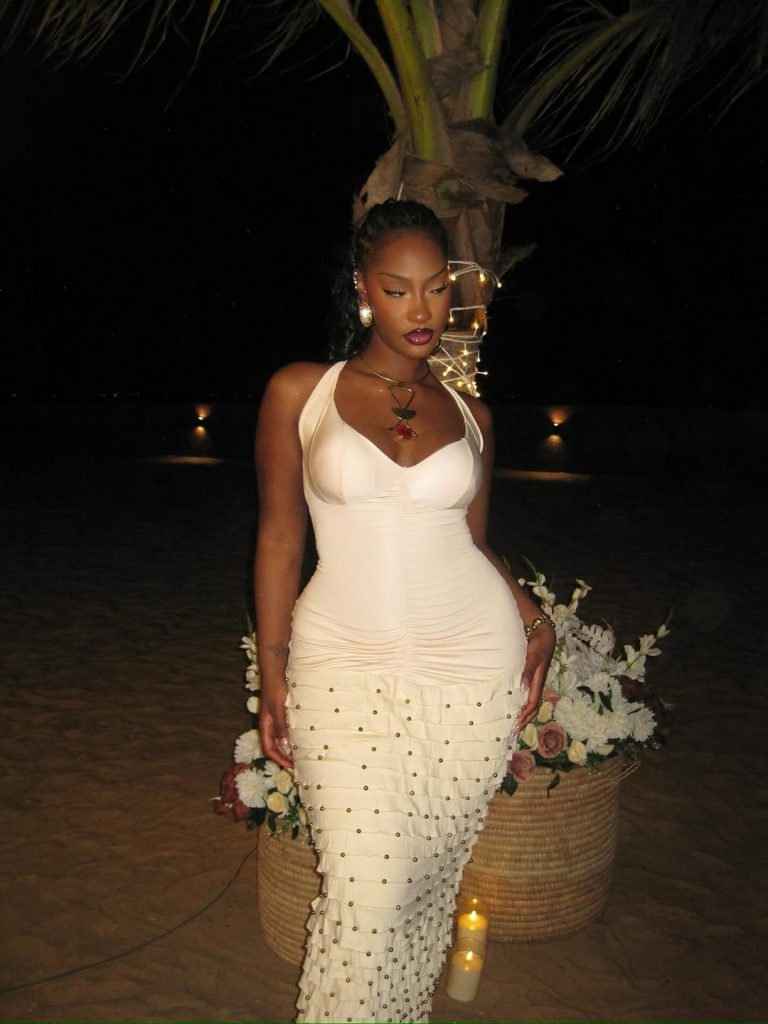
The idea of what the team desired from her was communicated on Friday, “So when Dan [Mbo], the director, called me and said okay so this is the idea. We’re shooting on the beach for a dinner scene. We need the girls to look exquisite. So we started, you know, throwing ideas back and forth, and I was giving her some references, and she was like, okay, let me show you this.”
This meticulousness is a positive sign for Nasky; it means there’s a clear vision, and she’s working with someone levelheaded. Raindance was no different; it was only more heightened. “For Raindance, we had to get Dave’s input on almost everything because he was one of the directors,” she says.
Despite being the artist, Dave was equally hands-on behind the scenes, and Nasky details that he wasn’t the only one, “Dave had to give a go-ahead for most of the things we wanted to do and also Tems. A lot of things had to go through Tems, too.”
The Grammy Award-winning artist Tems is renowned as much for her style as for her music. So it was no surprise for Nasky that she wanted to green-light the garments personally. “She had to approve of the style and everything.”
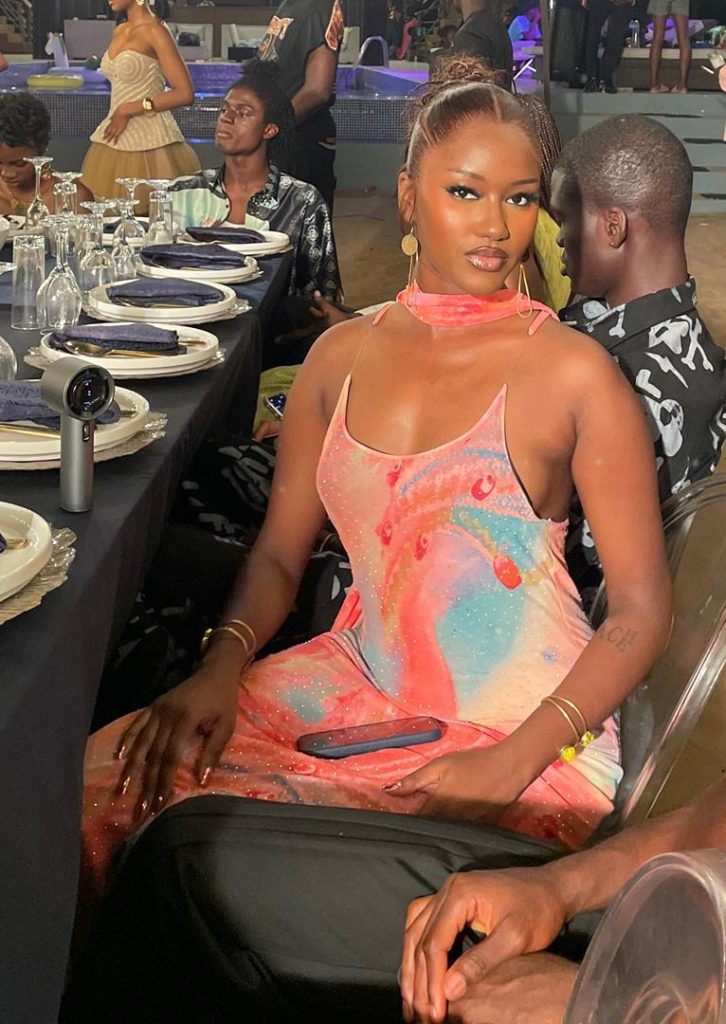
The aesthetic brief for “Raindance” was deceptively simple. Dave, known for a minimalist sensibility that often eschews the hyper-extravagance typical of the hip-hop genre, wanted the cast to look “rich but casual.” The goal was to ensure the models complemented the leads. “We wanted it to be shiny, simple, and beautiful. Dave wanted the models to just enjoy themselves and party with him and Tems. So that last scene, that was basically it. We weren’t acting,” she expresses.
To achieve this, Nasky turned exclusively to Nigerian designers. The task was to style 14 female cast members and 14 male cast members. She worked closely with the producers and creative leads. Nasky curated looks from several brands, and affirms her gratitude for them pulling through on short notice.
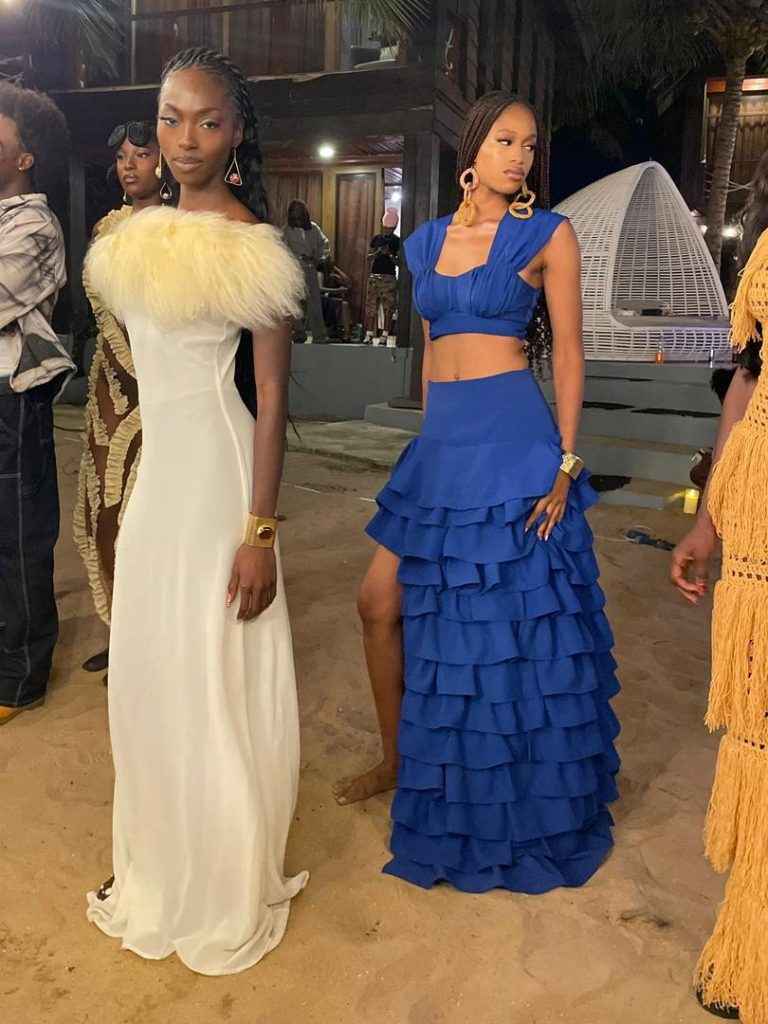
“We received a lot of clothes. Some pieces never made it on screen; options are a luxury necessity on tight sets, and you have to make sure the cast feels comfortable in the garments,” she highlights, “Plus I had roughly thirty minutes to style them on the day.”
The ambience on the set was very healthy for Nasky; she loved being a part of it, and her favourite moment? The dinner scene. “The glances. The intimacy. Everything came together,” she says. “Even behind the scenes, we were all like, wow.”
Nasky has worked enough sets to know when you’ve truly made magic. The styling industry is once she has been in since the early 2020s. It is a career path that excites a lot of people, but the leading question is how does one become a stylist, and more importantly, how did Nasky get to a Tems music video?
A Girl with an Unavoidable Pull
Today, Nasky has styled music videos for artists like Tems, Odumodu, SGawd, Lojay, and Mohbad. She is also the personal stylist for R&B singer, Amaeya, and has worked with Ashley Okoli. But as a kid, fashion was never presented to Nasky as a viable career path.
Like many young Nigerians, she grew up within a system that prized academic excellence and professional stability above all else. In school, she studied science-focused subjects and pursued a medical course. Chemistry. Physics. Mathematics. The “serious stuff,” as she calls it.
“I was a very serious girl,” she laughs. Yet, the creative impulse was always present, just not legitimised. She danced when she was younger. She paid attention to clothes, even if she didn’t dress herself extravagantly. Comfort, climate, and context mattered.
Growing up in Lagos, where heat and movement dictate daily life, her relationship with clothing was practical but observant. She noticed when outfits felt wrong for a setting, when costumes clashed with the environment, and when fashion distracted instead of communicating.
“I’d watch a music video or a film and think, ‘ Why are you wearing that here?’” she says. “It didn’t blend with the environment, and it used to bother me.”
That irritation, small and persistent, was the beginning of her stylistic vision. It wasn’t only the pandemic that she decided to answer the call of the void and explore the fashion industry. The COVID-19 lockdowns made Nasky seriously consider fashion as more than an interest. The global pause forced a reckoning. Life, as she had known it, felt unsustainable.
“I wasn’t happy,” she admits. “Life is rather unpredictable, and living without passion is no longer for me. I couldn’t live like that anymore.”
What followed was a dramatic career pivot that began with a series of quiet experiments. She began trying her hand at styling, taking on small sets, learning on the job, and navigating chaos without a blueprint. Her first experience was with an upcoming artist. The experience was unpolished, hectic, and overwhelming, as she recalls. But something “clicked”.
Her first major set came in 2022: a music video for Mohbad titled Backside. Nasky styled the lead vixen and dancers, juggling multiple looks under pressure. The video didn’t explode commercially, but for her, it was an inflexion point. “To date, when I look back, the outfits still look in vogue,” she affirms. “They still look good.”
That mattered more than virality to her. It confirmed longevity, and that was the path she wanted to follow.
Gabriella Nasky on Hierarchy, Visibility, and the Reality of Styling Sets
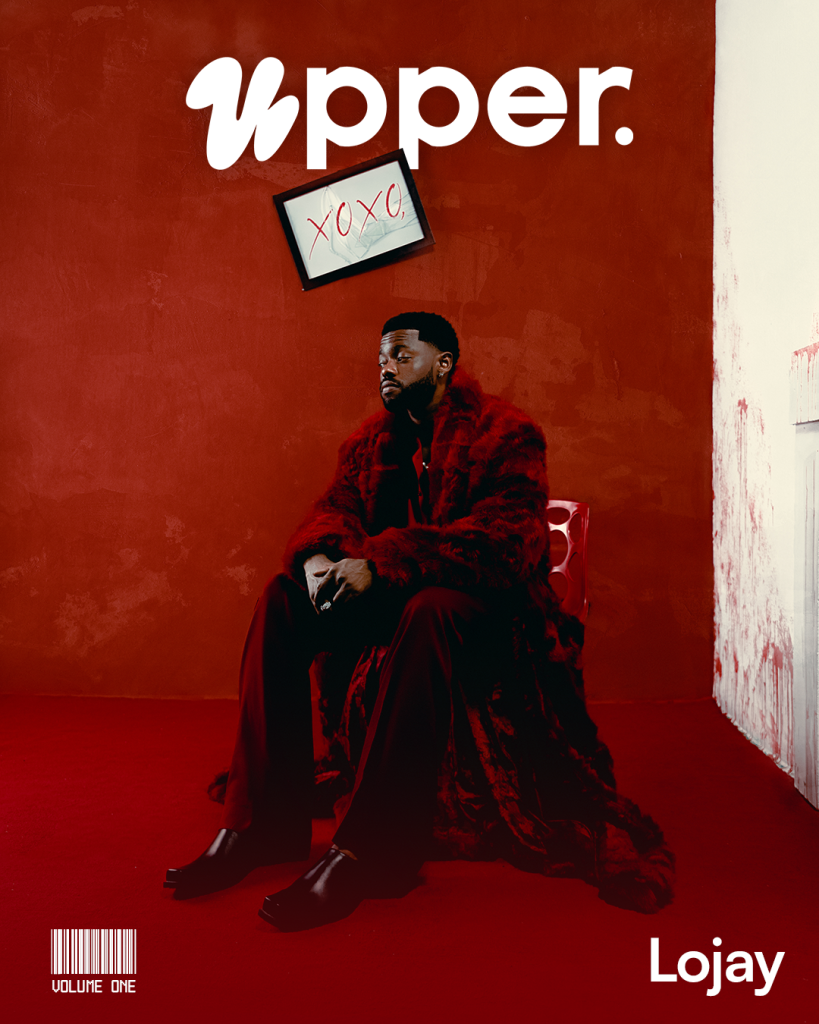
Nasky began as a cast stylist. This is the stylist responsible for dressing models, dancers, and background talent rather than the headline artist. It’s an essential role, but often an invisible one.
“Cast stylists do a lot,” she explains. “We’re styling many people on set. The headlines wouldn’t look good without that input.”
Yet recognition is uneven. On set, treatment is often dictated by perceived value, familiarity, or proximity to power. Nasky noticed it early, not bitterly, but observantly. “It’s a hierarchy,” she jokes. “You’re treated based on how well you’re known.”
It is a waiting game, and pretending it doesn’t exist is a delusional ploy, and Nasky was not going to delude herself. So she began collaborating aggressively, working with photographers, models, makeup artists, and creatives to push her work into circulation. Visibility was her strategy.
By the dusk of 2023 into 2024, it began to pay off. 2024 saw her move from a background designer to the central one. Among her favourite projects is a Trace Live performance in 2024, where she styled dancers in looks inspired by Fela Kuti’s legacy. “Fela Kuti is a huge part of the Nigerian entertainment industry, and I loved having to do that. The work was cultural, physical, and demanding; it was everything I enjoy,” Nasky recalls.
In the same year, she collaborated widely across fashion editorials and music visuals, including viral shoots with Aduke Shitta-Bey, and assisted on Bella Shmurda’s cover project. More recently, she styled Ashley Okoli and worked on projects connected to GTCO Fashion Weekend and Lojay… some are yet to be released.
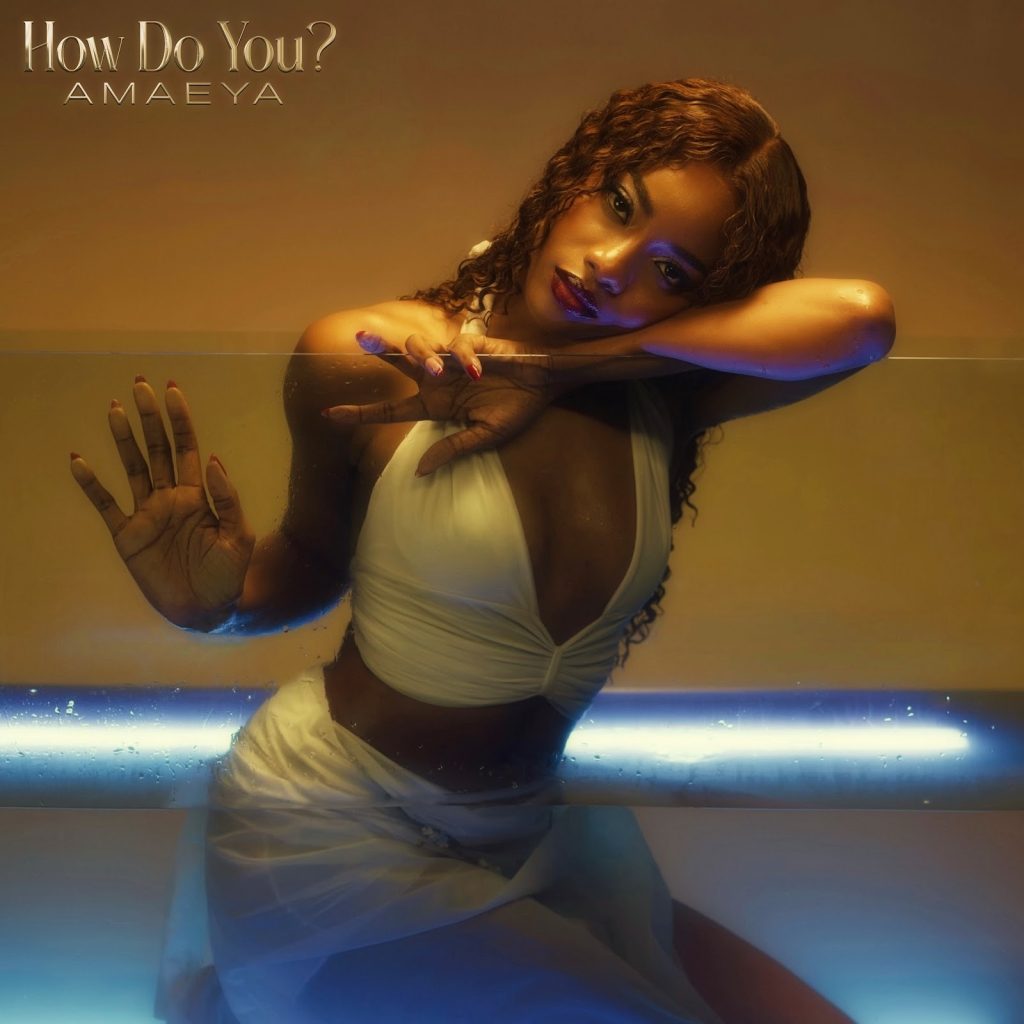
“I am most proud of my word with Amaeya. I have been her stylist since her first EP,” she states. Nasky has helped shape Amaeya’s visual identity, working alongside creative directors to translate sound into style. “That really centred me in styling,” she says, “It made things feel real.”
Read more on GTCO Fashion Weekend and its show of collections by Mowalola and Ahluwalia here.
What’s Next and Choosing Instinct Over Instruction
Nasky is developing more structure as she goes; she never wants to be rigid. She knows the next step is to form a distinct niche. But when asked about a niche, she hesitates to respond.
“Fashion is regurgitated,” she says honestly, “Whatever you think is new, someone did it 20 years ago.”
Instead of chasing novelty, she wants to focus on feeling. “I like women to look comfortable, beautiful, bold, and sexy,” she says, without apology. “Sexy matters to me.”
It is true, her work carries a consistent sensuality, but never at the expense of ease. There is always movement. Breath. Intention. It’s an aesthetic that respects the body.
In some ways, isn’t that a niche? “It’s not a niche,” she insists. “It’s just a flavour.” An acquired taste, if you must, because five years ago, she didn’t have this approach. A lot has changed since the pandemic, and when asked if she could go back in time, would she remain a student of the sciences? She rejects the offer, “I definitely made the right choices,” she says, and if you don’t believe her, you can always ask Tems.